Making Home: Turn End
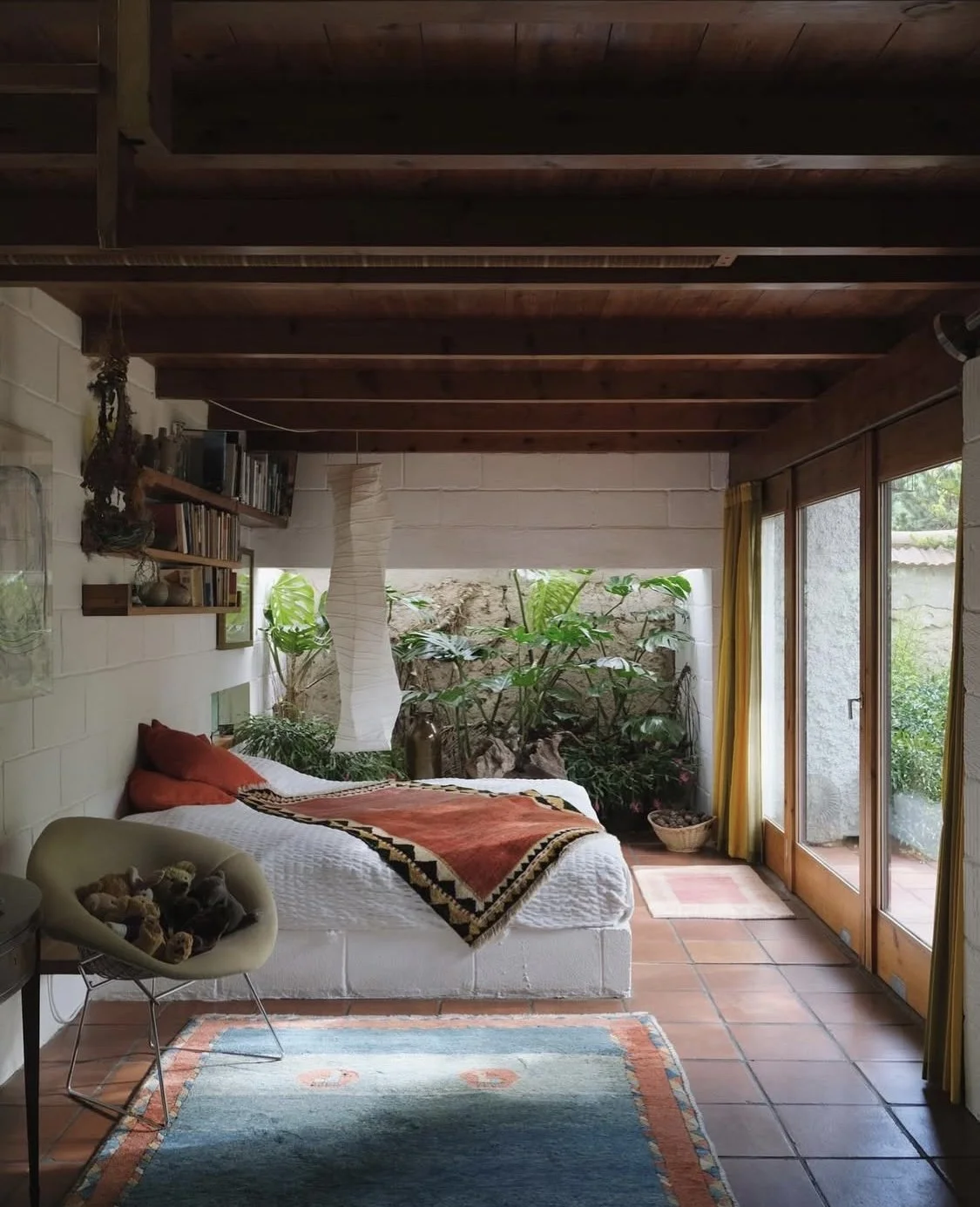
What’s in a home? And what happens to its ‘homeness’ if it is opened to the visiting public?...Is it possible for a house to retain its unique atmosphere and special qualities of ‘home’ when its celebrated residents no longer live there?
At Turn End in Buckinghamshire, modernist architect Peter Aldington and his wife Margaret are grappling with these issues as a live investigation of how to keep their house a home. The makers of the now fabled intimate family homes in Haddenham have raised a family and lived there for nearly fifty years. In 1998 they had the foresight to establish the Turn End Charitable Trust to ensure this groundbreaking and iconclastic house remains a ‘home’ long after they’ve gone.
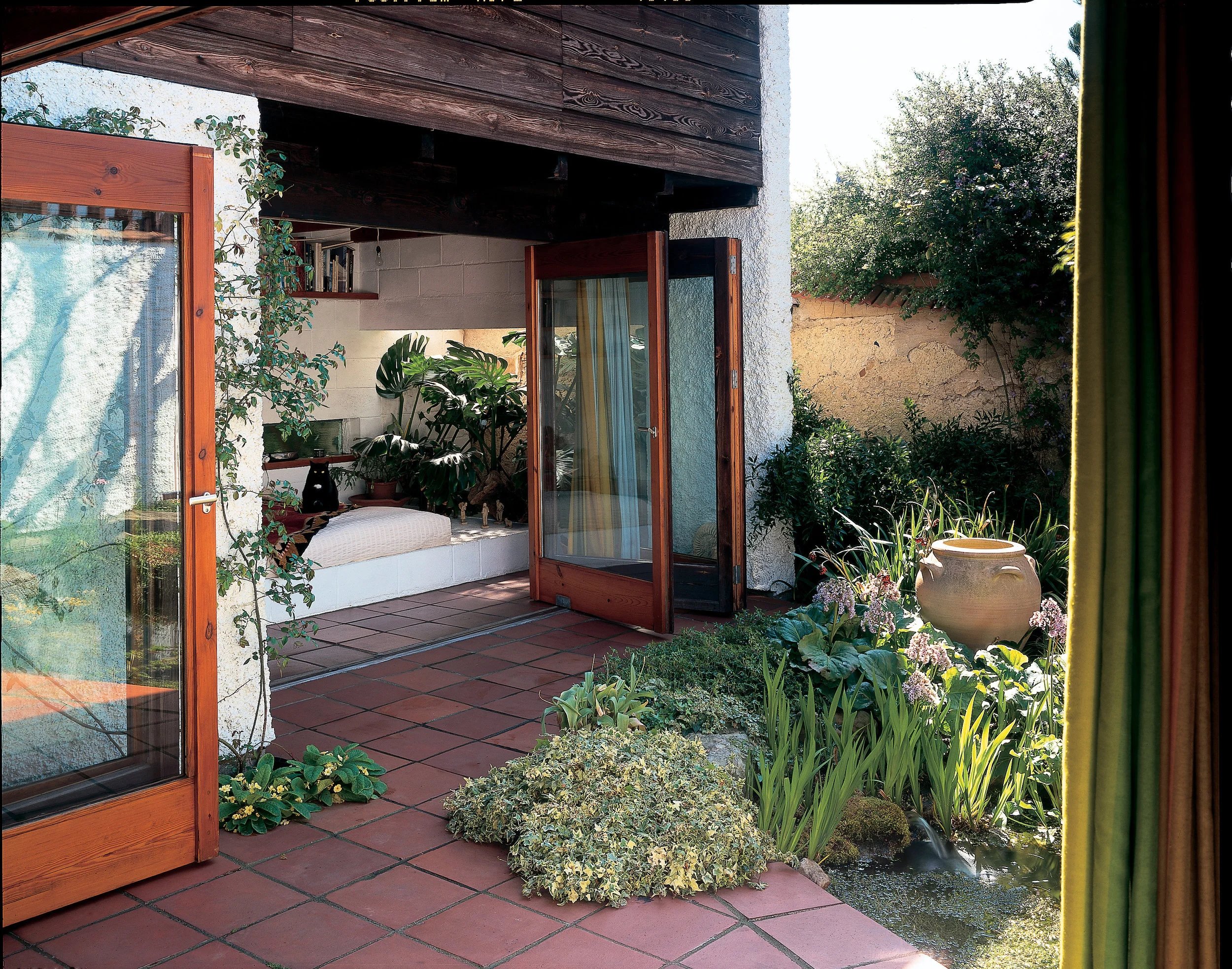
The bedroom leads to an inner courtyard, tied together by the wychert wall which runs from the garden into the house to create a winter garden with evergreens
There are not many precedents. Take Jim and Helen Ede’s Kettle’s Yard in Cambridge who always set out to make a ‘home’ and not a museum; or Jorn Utzon’s family home Can Lis in Mallorca where visitors are not allowed to drink red wine; or indeed William Morris’s Kelmscott Manor where many artists’ lives echo from every room.
Each of these houses has its own special qualities but they now share the status of what we loosely call a ‘historic house museum’. We visit these places with great pleasure and curiosity, seeking to connect in some way with the artist, designer, writer or family who once lived there. We walk in the spaces they walked, and gaze at the things they touched, enjoying that elusive feeling of intimacy, like a fugitive fragrance we can momentarily sense but cannot hold on to.
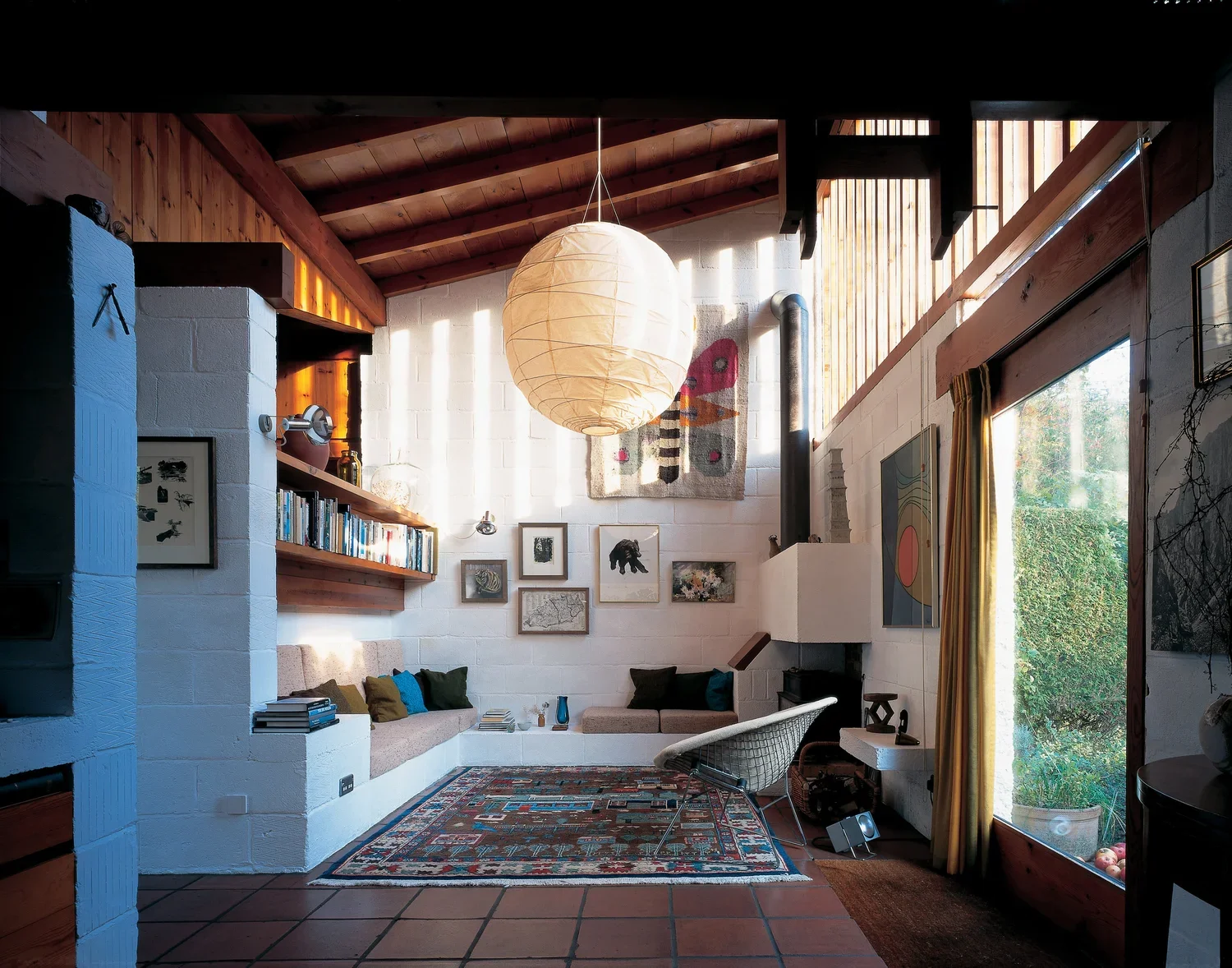
The living room at Turn End shows the honesty of materials through the timber structure, aerated concrete block walls, natural daylight and views to the garden. The Aldingtons use other crafted pieces to bring colour into the simple space.
The homes and gardens at Turn End are often cited as among the most beautiful houses built in England since the second world war. They have all the garlands of awards, heritage listings, statutory protections, as well as countless accolades from local visitors, architecture aficionados, industry leaders and global pilgrims.
These are all helpful signals of the specialness of Turn End, but they do not alone guarantee the kind of legacy Peter and Margaret are committed to. Working with the Turn End Trust on imagining its future, I have fallen under the aesthetic and material spell of the house and gardens. But, thus bewitched, I am also engrossed in the more pressing question of how Peter’s gift for creating such beautiful, ‘less-is-more’ spaces that flow and invite and help you breathe more deeply, can be shared and experienced in new ways that go beyond the passive, if enjoyable, gazing.
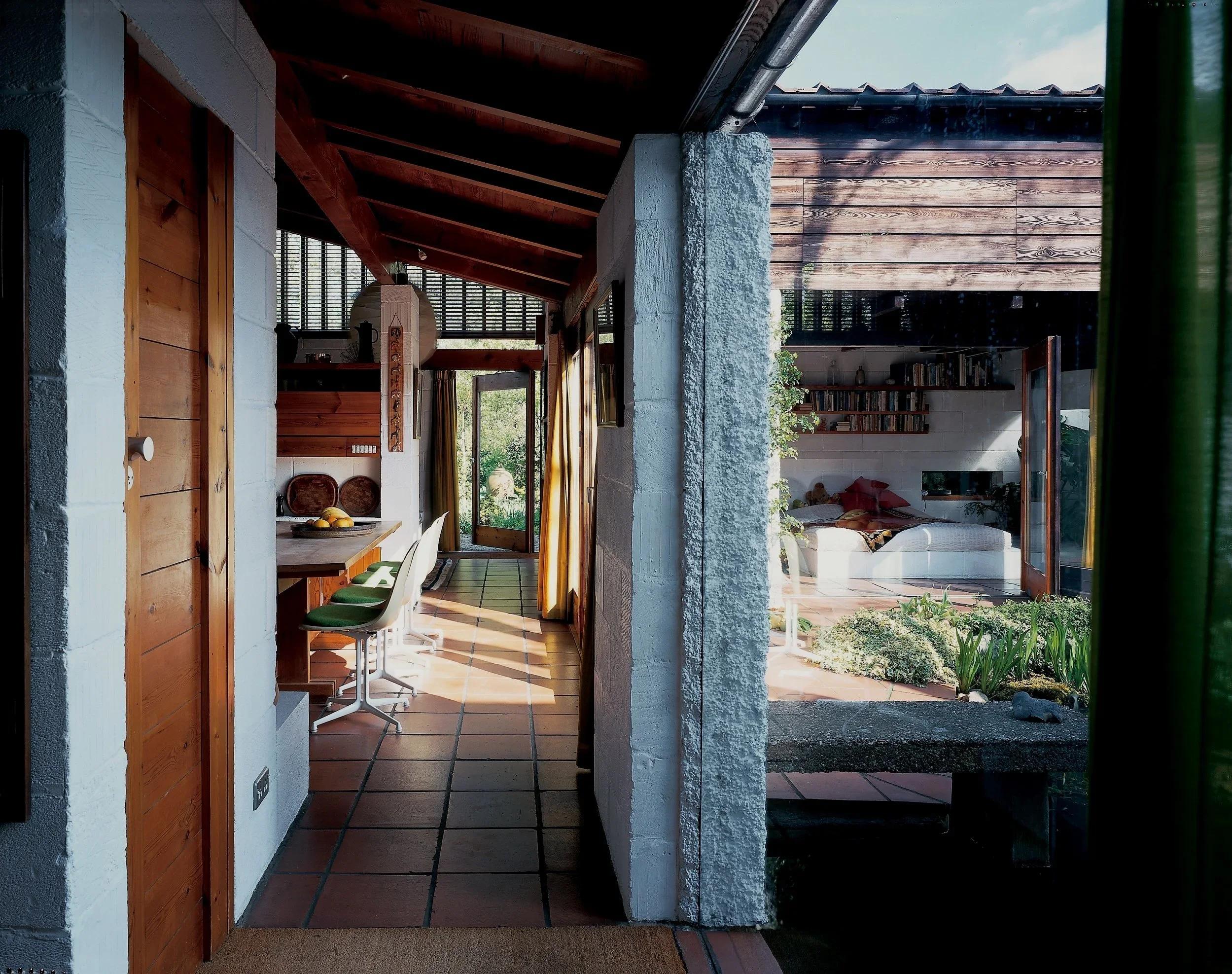
The joy of the interiors is the layering of materials, planes and spaces, all fresh with natural light, inviting through axes and views into adjoining spaces and to the garden and courtyard outside.
The answer to this riddle of course lies within the DNA of the buildings and its makers. Underpinning the particular qualities of Turn End that everyone who visits falls in love with are two key convictions that Peter and Margaret share.
First is recognising the power of place and prioritising the interdependence between house and garden. Life-long lovers of Scotland, and experienced mountain climbers, the couple believe buildings should be part of their landscape. Aldington recounts his infuriation when teaching architecture that many of the students paid no attention to the setting of their building designs, and when questioned why not, they would reply “I didn’t take the landscape option.” For Aldington, landscape is not an ‘optional’ subject to be added on to architecture, it is intrinsic to the practice. It is what he calls ‘the landscape obligation’.
From the very beginning the three houses at Turn End were quite literally a response to landscape — mature trees, local wychert walls, and the unique typology of Haddenham village housing shaped Aldington’s initial ideas for the site layout in the 1960s, ensuring the gardens are as much a part of the experience of living there as the buildings themselves.
One of the many garden spaces at Turn End where trees, shrubs and perennials complement the simple white and terracotta of the built forms.
Second is Aldington’s particular insistence on the power of making. Brushing off praise for his innovative designs, Peter always insists his skills are those of a maker:
“My buildings are ‘made’ rather than ‘designed’. They grow out of the materials and the technology used to make them. They are about putting things together.”
His philosophy was echoed this week by architect Niall McLaughlin on being awarded the RIBA Gold Medal:
“Building is an act, not an object. Architecture lies in its making and the way that it shapes learning, culture and communal life.”
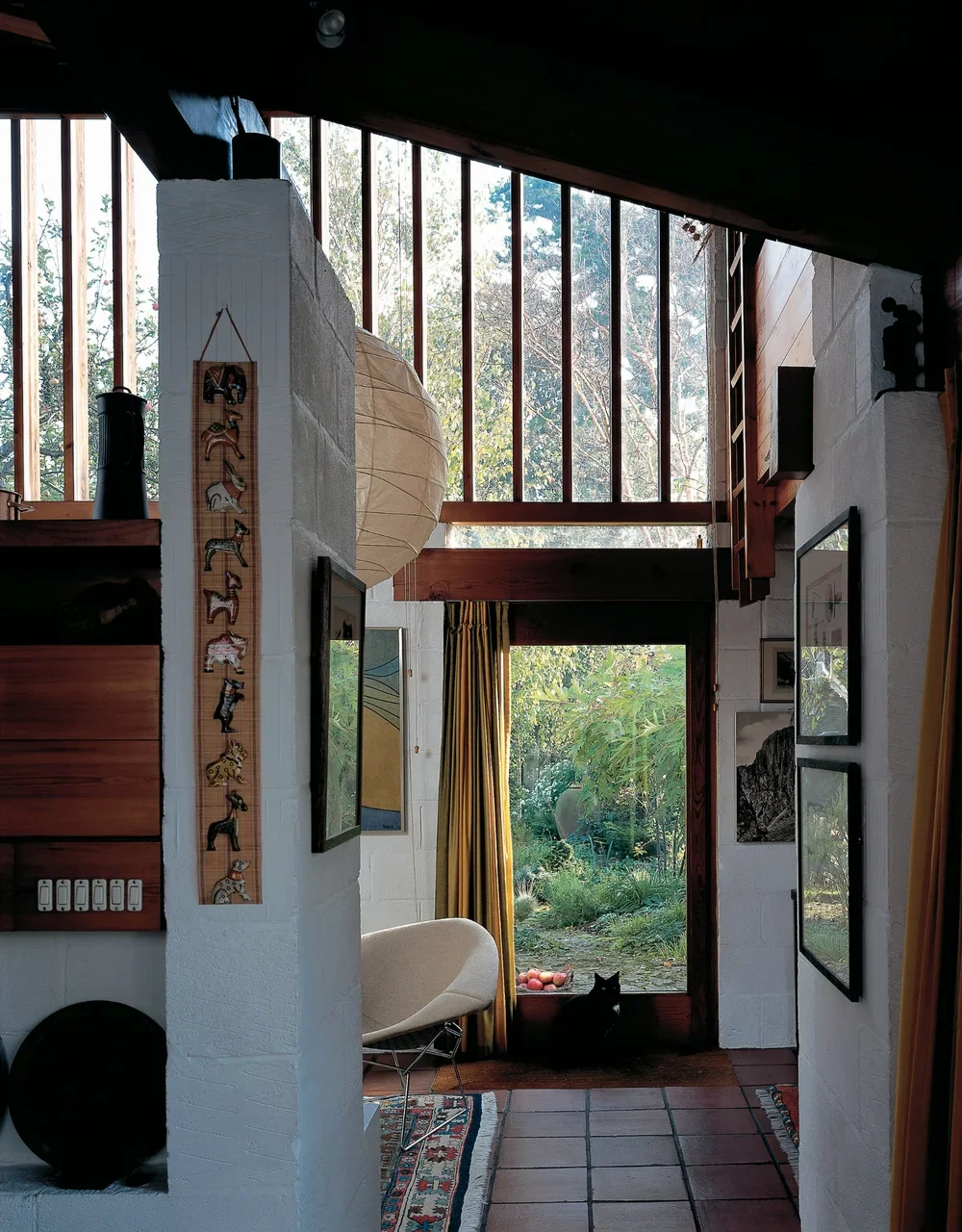
A visiting architect described the construction of Turn End as ‘things placed on top of other things.’ Otherwise known as the honesty and clarity of modernism where you can read how the building is put together and what it’s made of.
The Aldingtons’ commitment to making, learning, and communal life has guided Turn End for the last 50 years, as they generously opened their doors to students of architecture, material makers and lovers of horticulture. Their philosophy of making extends to the garden — he and Margaret eschewed 2D designs, and instead focused on creating a sequence of external spaces through three-dimensional laying out, plotting, experimenting: using their hands, their tools and their eyes.
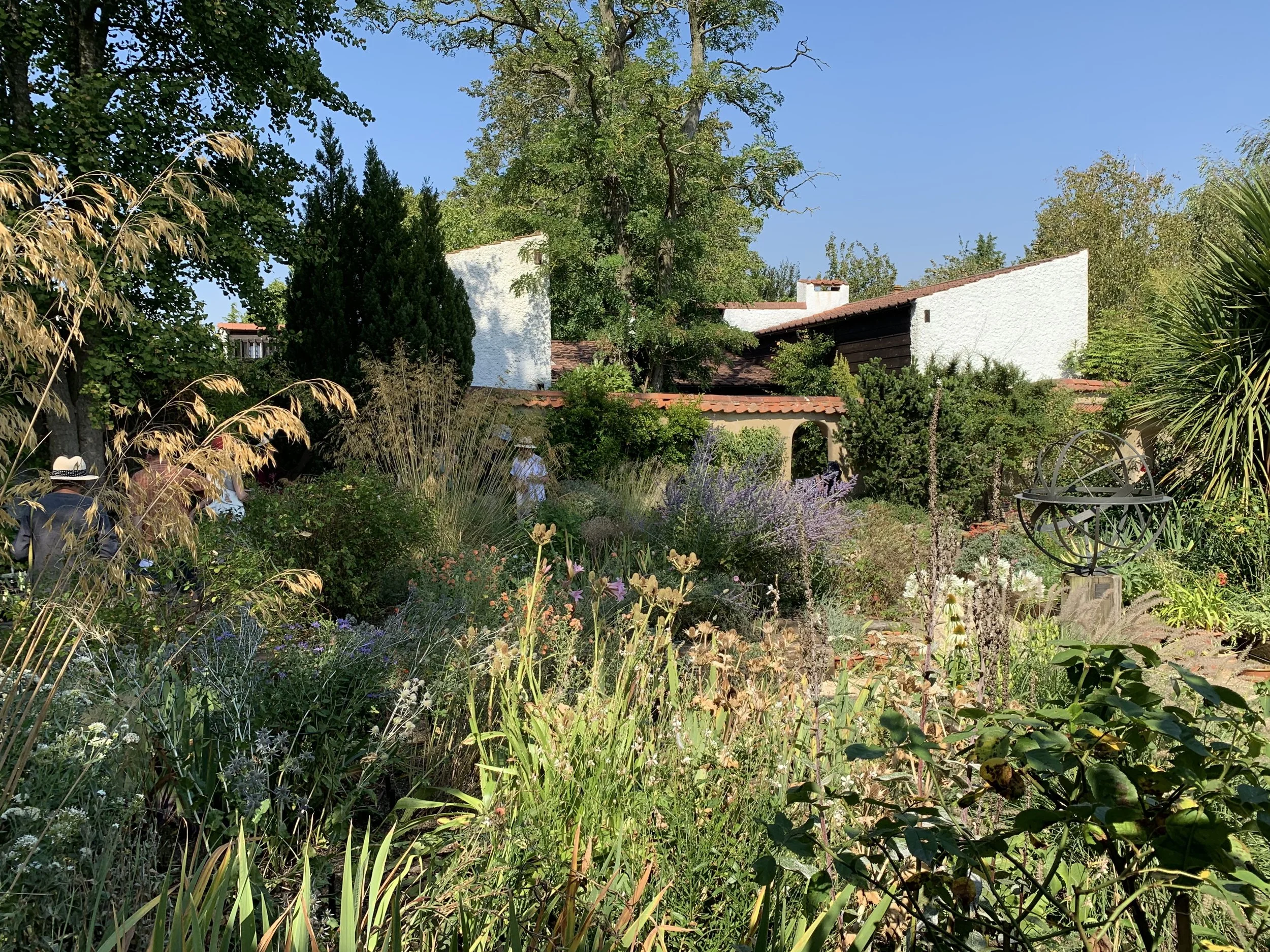
‘No Man’s Land’ Garden at Turn End
Peter and Margaret Aldington’s legacy at Turn End is an ancient one: that of homo faber, ‘the making human’. They want their home to inspire people to make: to make furniture, buildings, ceramics, fabrics, gardens. He and Margaret made the buildings at Turn End and the Trust plans to honour that DNA by creating opportunities for people to learn new skills in woodworking, horticulture, textiles and furniture-making.
“I am a doer, a maker of things…” he says. A maker of buildings, of gardens but most of all, a maker of home.
For more information about the future of Turn End and how you can get involved: https://www.turnend.org.uk/news/2025/6/27/jxcc13lqnk9isg1t0sm40kzhapxxtn
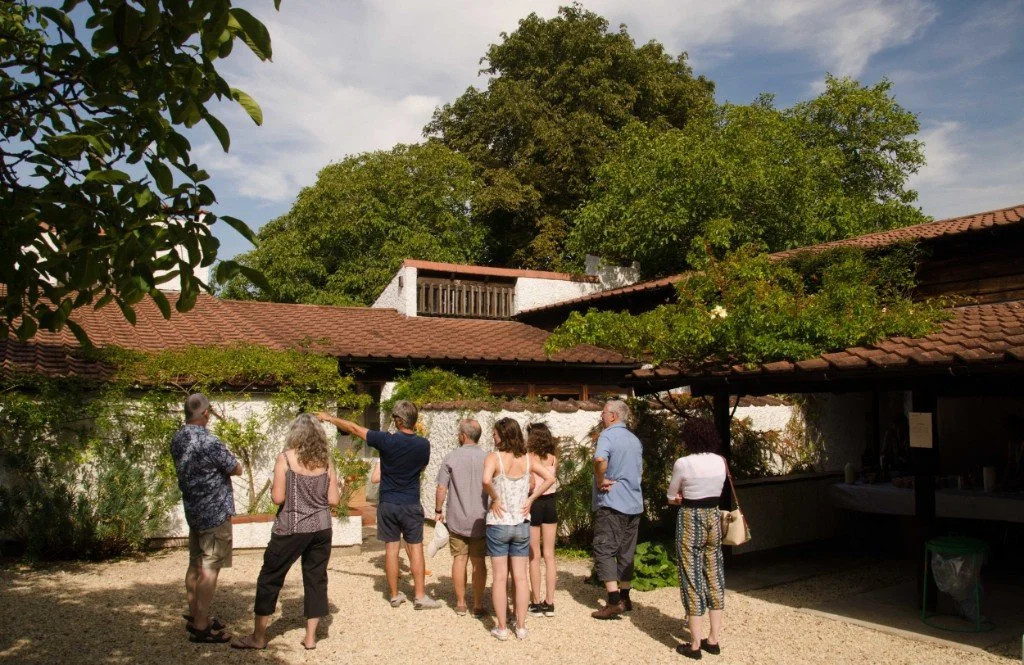
Open Day at Turn End, view from the shared courtyard showing Turn End on the right and Middle Turn to the left. The third house, knowns as The Turn is beyond left of frame.